Menards is one of the go-to sources when a homeowner wants to build a paver patio without hiring out — the SKU range is deep, the pricing is competitive, and most of the paver and block stock is available same-day. But turning a stack of Menards pavers into a stunning backyard patio takes more than a truckload and a weekend. We install, repair, and reseal thousands of square feet of pavers every year, and this guide is how we'd walk a friend through the project — from cost math to base prep to the finishing touches. Before you start, we recommend browsing the Menards paver patio ideas on Pinterest and watching a Menards YouTube install series to lock the look before you buy.
What types of pavers does Menards offer?
Menards stocks four main categories of paver and block: concrete pavers (the workhorse — cheap, uniform, easy to lay), brick pavers (traditional look, tighter joints, higher price), natural stone pavers (travertine, flagstone — most expensive, most character), and larger patio blocks and stepping stones for casual walkways. Each Menards paver block is rated by thickness, load class, and freeze-thaw performance. Within each category you get a range of finishes, thicknesses, and pattern-friendly shapes so a plain section of lawn can become a real outdoor room in a weekend of backyard work.
Menards paver patio ideas on Pinterest and the Menards YouTube install series are the fastest way to visualize how a block layout will read in your own backyard before you commit to a color.
How can I calculate the cost of Menards pavers for my project?
Cost math for a Menards paver and block patio project comes down to five line items:
- Pavers and block units. Square footage × price per SKU. Menards concrete pavers run roughly $1.50–$4.50/sq ft; brick pavers $3–$7/sq ft; natural stone $6–$12/sq ft; a large patio block runs $2–$5 each.
- Base materials. Open-graded crushed stone at $30–$45 per ton, plus polymeric joint sand and bedding sand.
- Edge restraints, geotextile fabric, and rentals (plate compactor, wet saw).
- Sealer — factor $0.35–$0.75/sq ft in materials if you plan to seal, which you should.
- Delivery and dumpster fees if the load is beyond DIY hauling.
For a 20×20 backyard patio (400 sq ft) that lands most DIYers in the $1,800–$3,500 range in materials, before sealer. Our full breakdown for the region is in cost to install pavers in South Florida.
How much should a 20x20 paver patio cost?
A 20×20 paver patio (400 sq ft) built with Menards pavers costs roughly $1,800–$3,500 in DIY materials and $6,000–$14,000 turnkey with a professional installer. The DIY-versus-pro gap is base preparation, compaction, and the warranty — a professional install on the right base won't settle or shift; a rushed DIY base usually will. Menards backyard patio kits (10x10 and 12x12 pre-bundled block kits) run $500–$1,200 depending on the paver line.
Where is the cheapest place to buy pavers?
Menards is competitive but not always cheapest. The real cheapest place to buy pavers and block is usually the manufacturer's local yard (in the Midwest, that often means Belgard, Unilock, or Anchor Block direct), followed by regional big-box competition. Menards' advantage is the 11% rebate program, the same-day inventory, and the fact that everything for the project — paver, block, base, sand, sealer, tools — is on one aisle.
Is it cheaper to do a paver patio or concrete?
Poured concrete is cheaper upfront ($6–$10/sq ft installed) than pavers ($15–$30/sq ft installed). Pavers cost more day one and win over decade — no cracking, individual paver and block units can be lifted and replaced, and the finished patio lasts 25–30 years versus concrete's 15–20 with visible cracks. If you plan to stay in the house, pavers pay back.
Can I just lay pavers on dirt?
No. Pavers laid straight on dirt over a plain section of lawn will heave, sink, and separate within a season. Every install needs an excavated and compacted base (crushed stone + bedding sand). Skipping the base is the single most common mistake we get called to repair. If you want the actual sequence, keep reading — the base is section three.
What materials are essential for a Menards paver patio project?
- Pavers and block units (calculate square footage + 10% overage for cuts and breakage)
- Open-graded crushed stone for the base (4–6 inches compacted)
- Bedding sand (1 inch, screeded flat)
- Polymeric joint sand to lock the joints
- Geotextile fabric between soil and base to prevent migration
- Edge restraints and 10-inch spikes
- Paver sealer (see our best paver sealer for Florida guide)
- Tools: plate compactor (rental), wet saw (rental), rubber mallet, screed board, string line, tape, spirit level, tamper, safety glasses, knee pads
How do I install Menards pavers for a patio?
1. Plan the patio
Pick the location — check permits, utility lines, drainage flow away from the house, and shade. Size and shape the patio around your furniture and traffic pattern. Menards' Design-It Center is a useful free tool for visualizing layouts and generating a material list. Their YouTube "How To Install Patio Block" video is the best free walk-through of the sequence.
2. Prepare the base
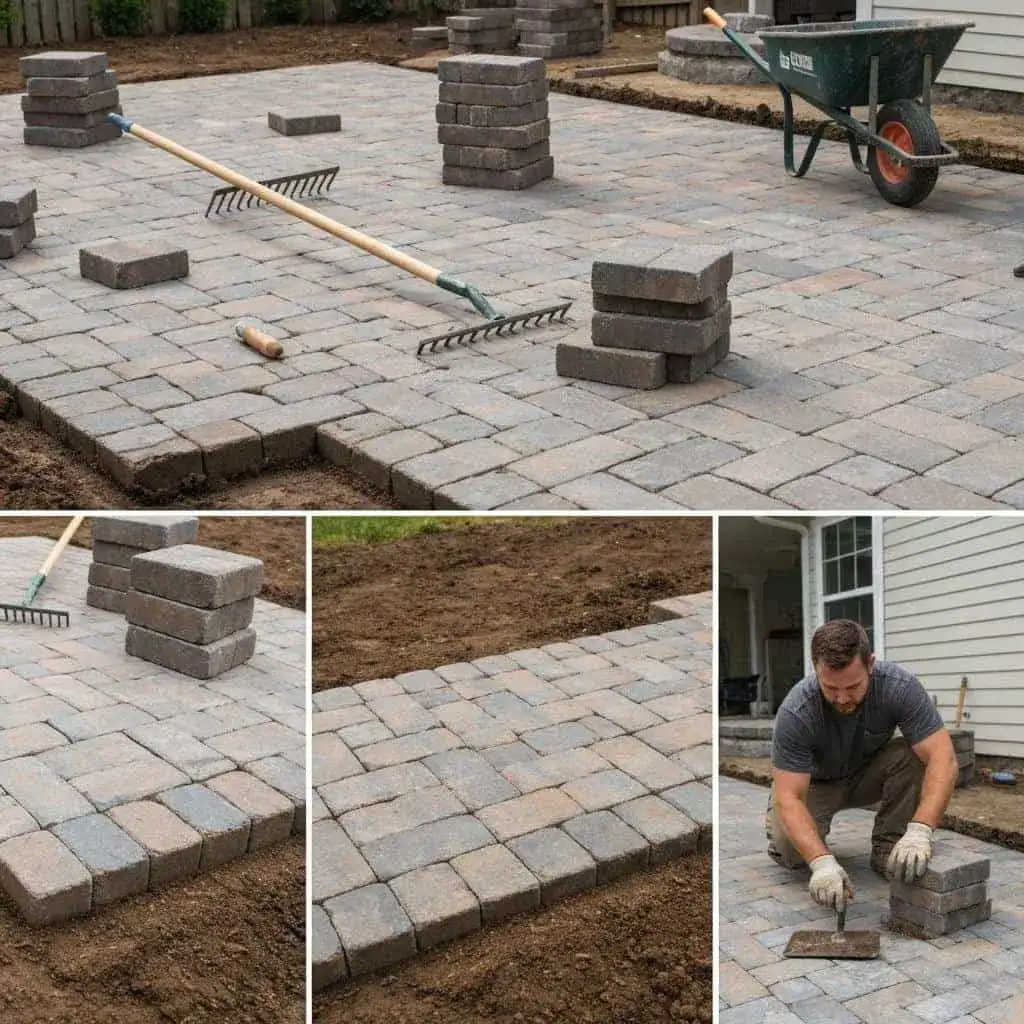
Mark the footprint with stakes and string, transforming a plain section of lawn into an excavated project site. Excavate 6–8 inches deep, lay geotextile fabric, spread 4–6 inches of open-graded crushed stone in 2-inch lifts, and compact each lift with a plate compactor. Grade with a 1/8 inch per foot slope away from the house for drainage. This is where 90% of failures start — a shortcut here costs you the whole patio in three years.
3. Lay the pavers
Spread 1 inch of bedding sand and screed it dead flat. Start in one corner and work outward along string lines. Set each brick paver or concrete block with a rubber mallet, keep joints uniform, and check level every few rows. Cut edge pieces with the wet saw. Install edge restraints around the perimeter and stake them.
4. Finishing touches
Sweep polymeric joint sand into the joints, vibrate the whole surface with the plate compactor (with a protective pad), sweep again, mist with water to activate the polymer, and let it cure. Once the sand has cured for 48 hours and the pavers are fully dry (30–60 days for concrete pavers before sealing), apply a quality paver sealer.
How long do Menards pavers last and what maintenance do they require?
Free Estimate · No Obligation
Ready to transform your pavers?
Same-week scheduling available across South Florida.
Menards concrete pavers last 25–30 years on a properly built base. Natural stone lasts longer. Brick pavers land in the middle. Maintenance is light: sweep, rinse, spot-clean spills, reseal every 3–5 years, and refresh joint sand as needed. Sealed pavers are low maintenance — most calls we get for repairs trace back to base failure, not the paver itself. Our how often to seal pavers in Florida resource covers the reseal schedule.
What are common mistakes to avoid when laying Menards pavers?
- Skipping the compacted base. The single fastest way to waste a weekend.
- Wrong sand. Play sand or mason sand under the pavers instead of bedding sand — pavers rock and separate.
- No edge restraints. The perimeter walks outward and the field unravels.
- No slope for drainage. Water pools, joint sand washes out, weeds move in.
- Sealing too early. Concrete pavers need 30–60 days to cure before the first seal.
- Ignoring polymeric sand cure time. Rain during the 24-hour cure ruins the batch.
- Under-ordering. Always add 10% overage — cuts, breakage, and future repairs need matched stock.
Frequently Asked Questions
Where is the cheapest place to buy pavers near me?
Manufacturer yards and regional distributors often beat big-box chains on volume. Menards' 11% rebate, same-day inventory, and complete-project aisle usually put them in the top three cost-effective options for a backyard patio project. Get quotes from at least two paver and block suppliers plus one direct yard before buying.
Can I lay pavers on dirt without a base?
No. Pavers require a compacted crushed-stone base and a screeded sand layer. Laying directly on dirt or a plain section of lawn causes settling, heaving, and joint failure within one season, and any warranty on the paver or block is void without a proper install.
Is a paver patio cheaper than concrete long-term?
Yes. Concrete is cheaper to pour but cracks in 10–15 years and is expensive to repair. Pavers cost more upfront and last 25–30 years with easy spot repairs. Over the lifetime of the yard, pavers win on cost per year.
How much prep work does a 400 sq ft Menards paver patio take?
Excavation, base prep, and screeding for a 20×20 backyard patio take a strong two-person weekend on soft ground, or a full three days on rocky or compacted soil. The actual paver laying is the fastest step — the base is the time investment.
Do Menards pavers need to be sealed?
Yes, once they've cured for 30–60 days. Sealing the block face and paver joints protects the color, stops joint sand loss, and prevents staining. We use penetrating sealers for a natural finish or wet-look sealers when the homeowner wants richer color.
What's the best way to design the layout?
Menards' Design-It Center is a free tool that lets you sketch the patio, try shapes, and generate a material estimate. Pair that with a YouTube walkthrough of the install and a Pinterest board of Menards paver patio ideas to lock the design before you buy the block.
How do I keep weeds out of the joints long-term?
Polymeric joint sand plus a paver sealer keeps 95% of weeds out. Any that push through get sprayed with a targeted herbicide, and the joints get refreshed every few years. Skipping either step and you'll be pulling grass every spring.
Building a stunning backyard patio with Menards pavers is well within DIY reach — the base is where every project is won or lost. If you'd rather have the base and paver install warrantied in writing, see our paver installation service for how we do it.