Paver Sealing Before and After
Real before-and-after photos of professional paver sealing across South Florida — driveways, patios, pool decks and walkways — plus a homeowner guide covering the sealing process, when to seal your pavers (especially new ones), spray vs roll application, wet look vs matte finishes, and how long paver sealer actually lasts in Florida's climate.
What Paver Sealing Actually Does — the Before/After Story
The dramatic difference you see in every photo below comes down to three visual effects happening simultaneously when a paver sealer is applied correctly. First, the sealer rehydrates the aggregate face, restoring the deep natural color that Florida's UV had been slowly bleaching out — pavers that looked chalky and washed-out come back to the tone they had on install day. Second, the sealer fills the microscopic pores in the paver surface, which is why sealed pavers reflect light with the depth you see in the "after" photos — the wet look sealer variant takes this even further. Third, stain, mineral haze, and efflorescence get locked out — sealed pavers stay looking like the "after" photo for 2–3 years instead of drifting back toward the "before" state within one Florida rainy season.
It's important to understand what you're looking at in these before/after shots isn't just cleaning. It's a full clean-and-seal cycle: deep clean with biodegradable pre-treatment, pressure washing to remove embedded organic buildup, polymeric sand joint replacement so the pavers regain structural integrity, then a breathable UV-stable sealer applied by low-pressure sprayer. Pressure washing alone would clean the surface — but the color would fade again within months without the sealer locking it in. The sealer is what makes the transformation last.
The materials matter as much as the technique. We use professional-grade paver cleaner (biodegradable, algaecide-active) rather than generic driveway cleaner, and a marine-grade breathable sealant rather than an off-the-shelf acrylic. The two most common paver types you'll see below are concrete paver installations (Belgard, Tremron — the value driveway option) and natural stone like travertine (the pool deck standard). Both respond dramatically to a full clean-and-seal cycle, though the sealant chemistry differs: concrete pavers accept a film-forming sealer, while travertine and other natural stone require a penetrating impregnating sealer that protects without changing the surface texture. On every before/after photo below, the sealant used was selected specifically for that paver type.
Wet Look vs Matte — Which Before/After Effect Do You Want?
The photos below include both finish types — worth knowing what you're choosing. Wet look sealer creates the glossy, deepened-color effect that looks like the pavers are permanently rain-soaked. It amplifies color contrast the most and photographs dramatically, but on a pool deck it needs a non-slip aluminum-oxide additive to stay safe when wet. Matte and satin sealers preserve the paver's natural finish while still doing all the protective work (color lock, stain resistance, joint stabilization) — the before/after change is subtler visually but still clearly visible. For pool decks, most South Florida homeowners choose a satin finish with non-slip additive; for driveways and patios, wet look is more common because barefoot safety isn't the primary concern. See the full comparison in our wet look vs matte paver sealer guide.
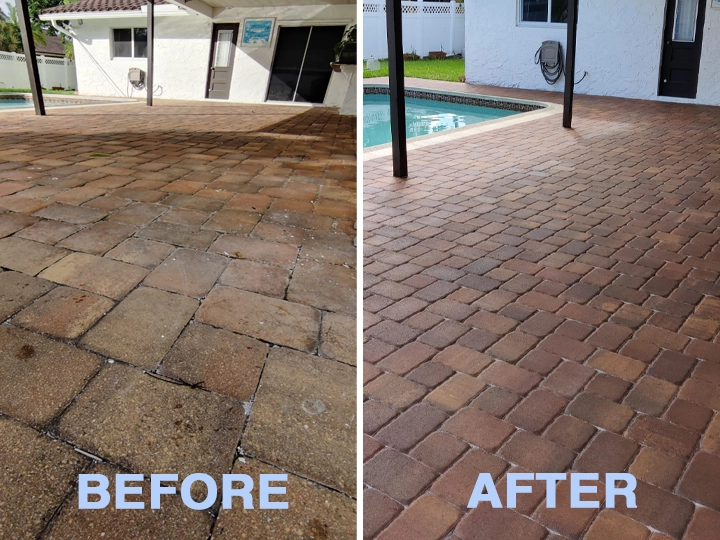
Full clean, re-sand and seal on a Boca Raton driveway — the left half shows the faded, open-jointed surface we started from.
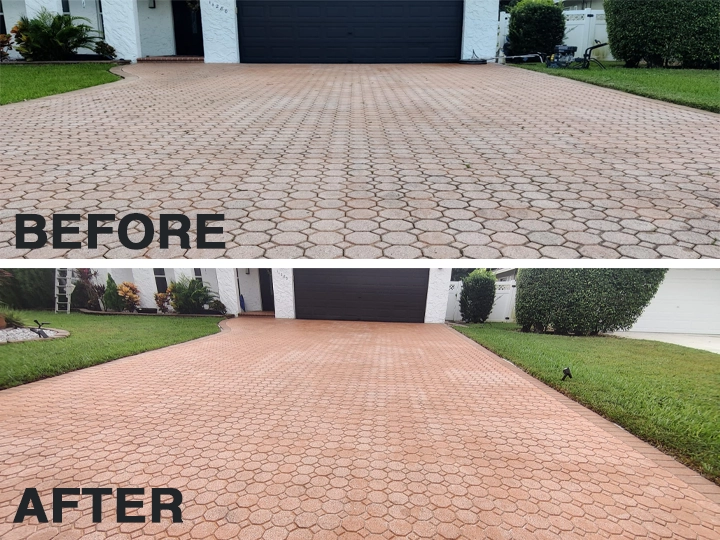
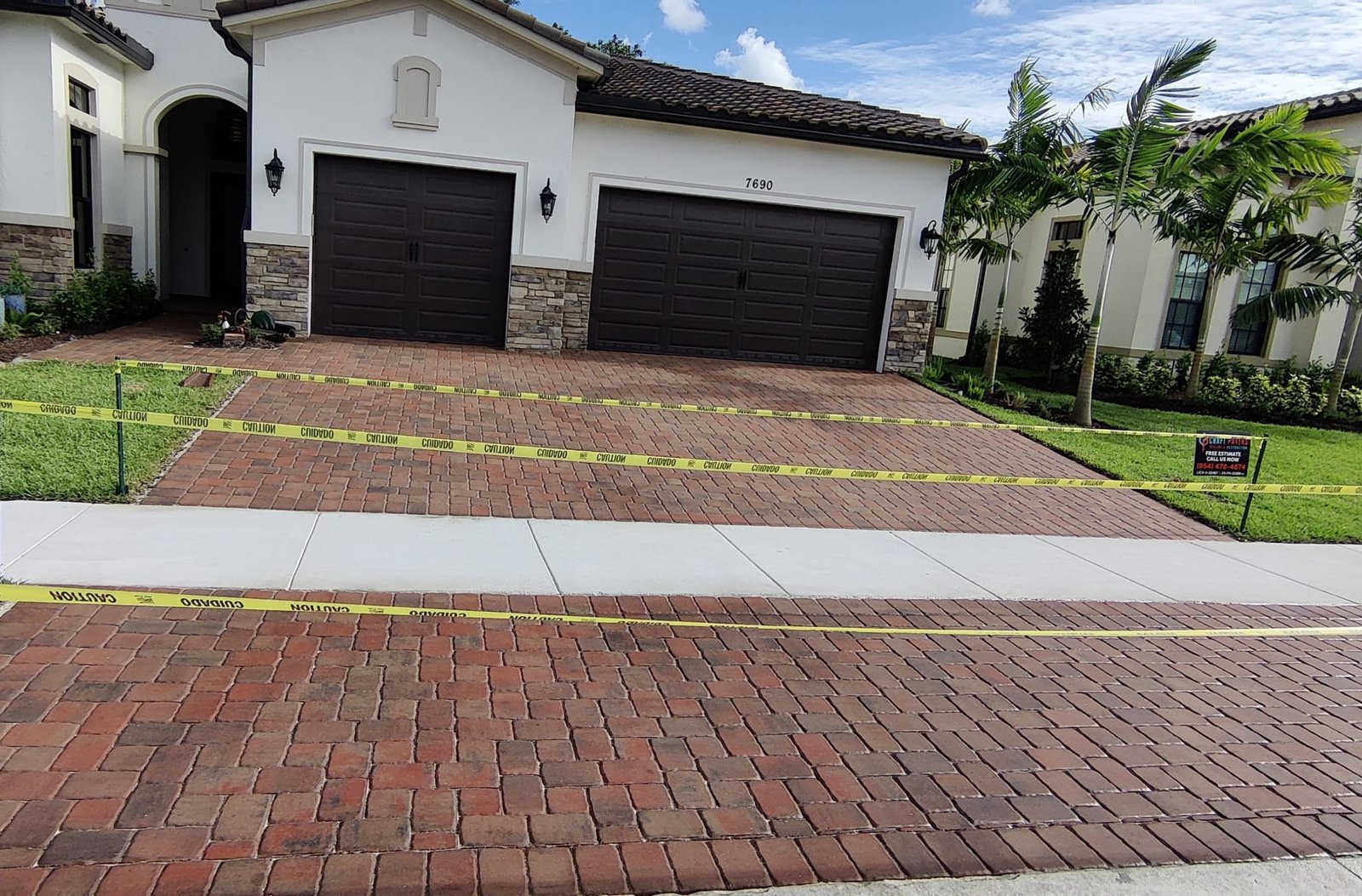
Driveway sealing in Boca Raton: color deepens and the joints are locked with fresh polymeric sand before the sealer goes down.
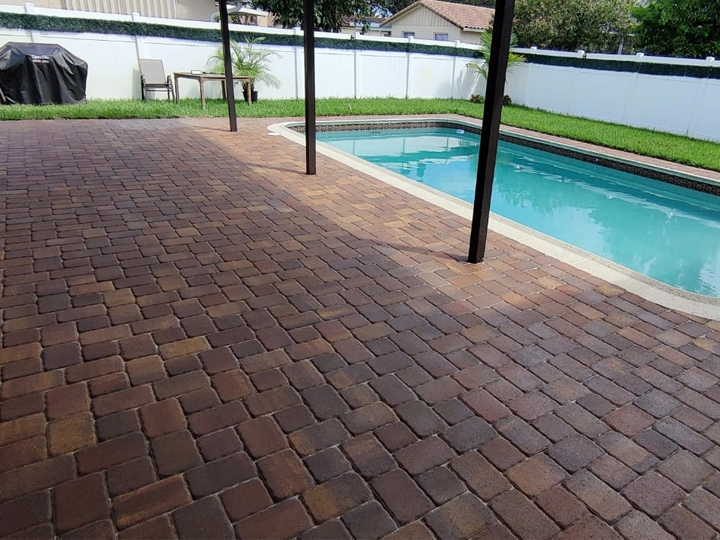
Same pavers, one visit apart — years of UV fading reversed by cleaning and a color-enhancing sealer.
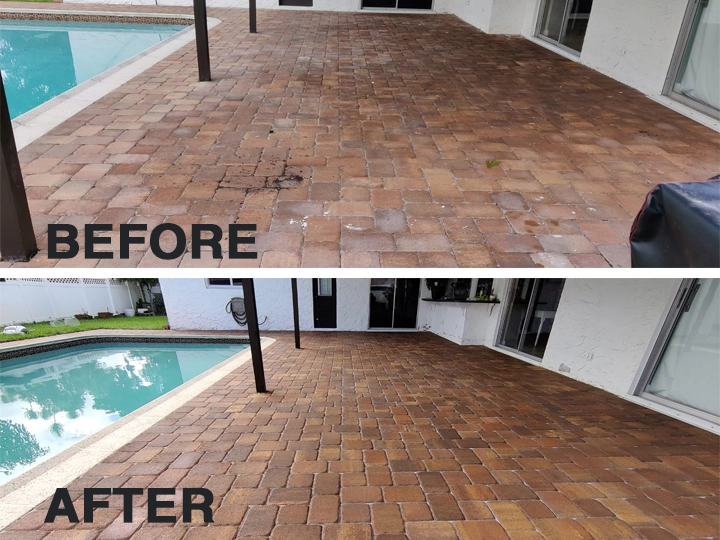
Pool deck restoration: biological staining stripped, joints re-sanded, then sealed with a non-slip-safe finish.
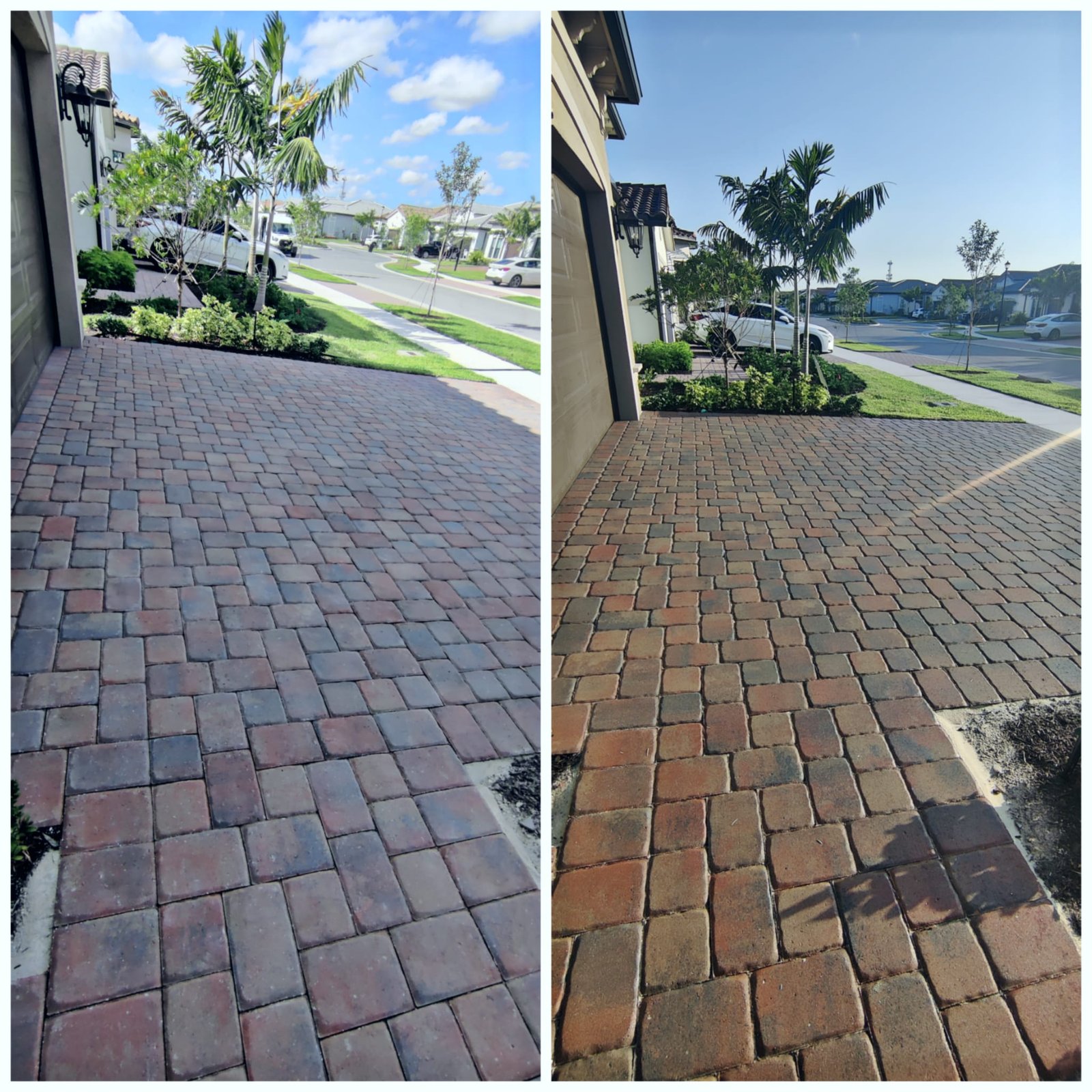
The classic sealing transformation — dull, chalky surface on one side, saturated color and defined joints on the other.
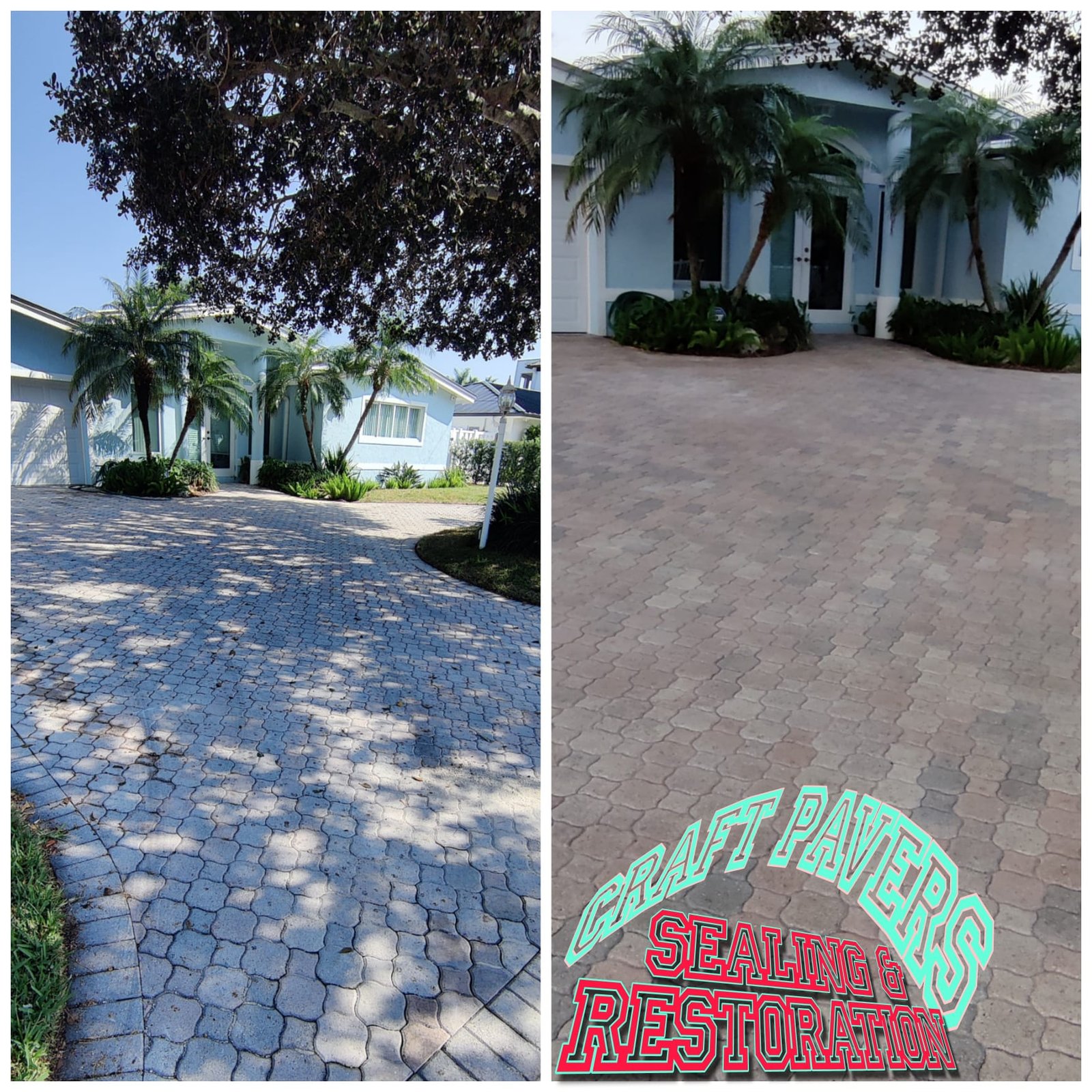
Driveway restoration: settled areas re-set and the whole field cleaned and sealed as one surface.
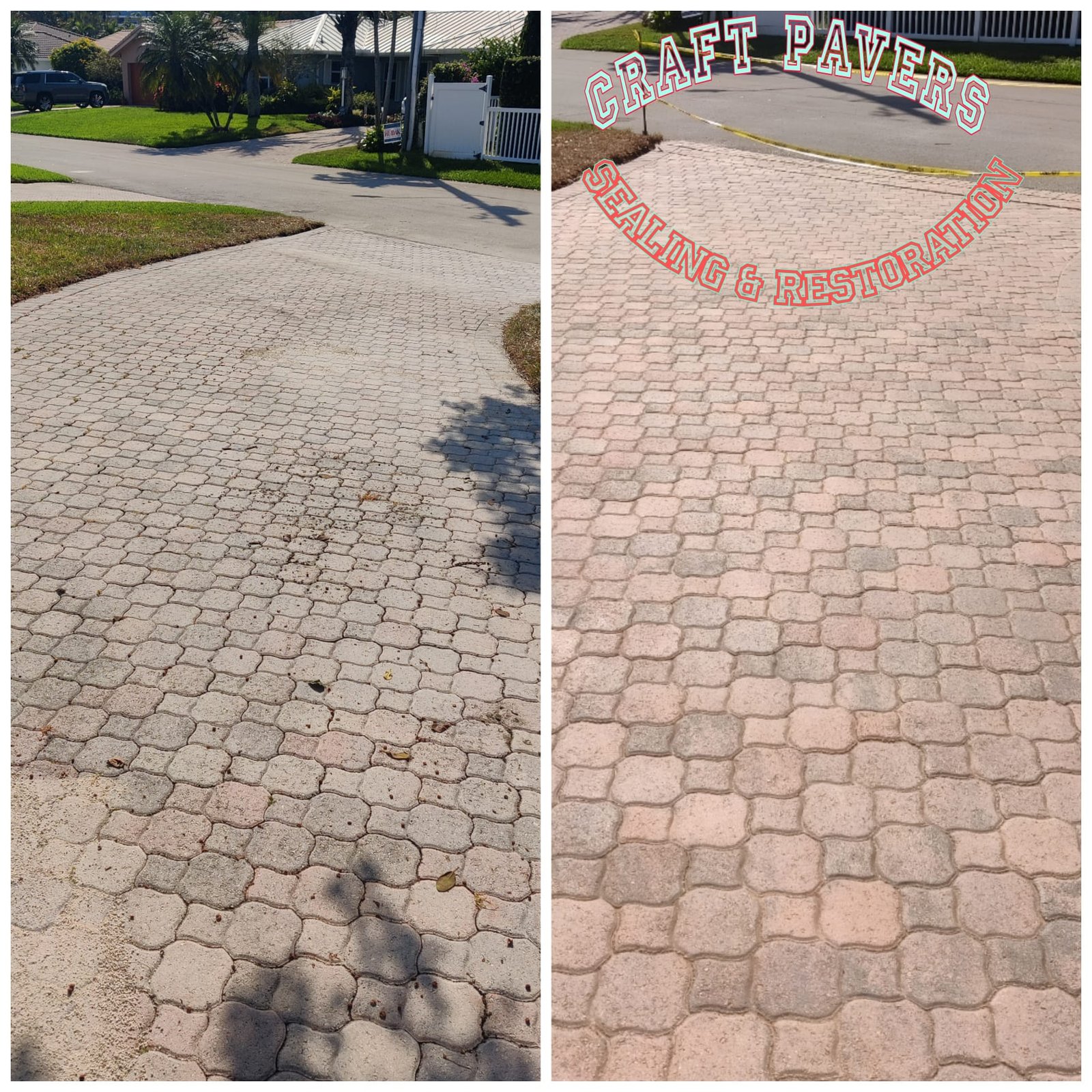
Patio after cleaning and sealing — organic staining removed before any sealer touched the surface.
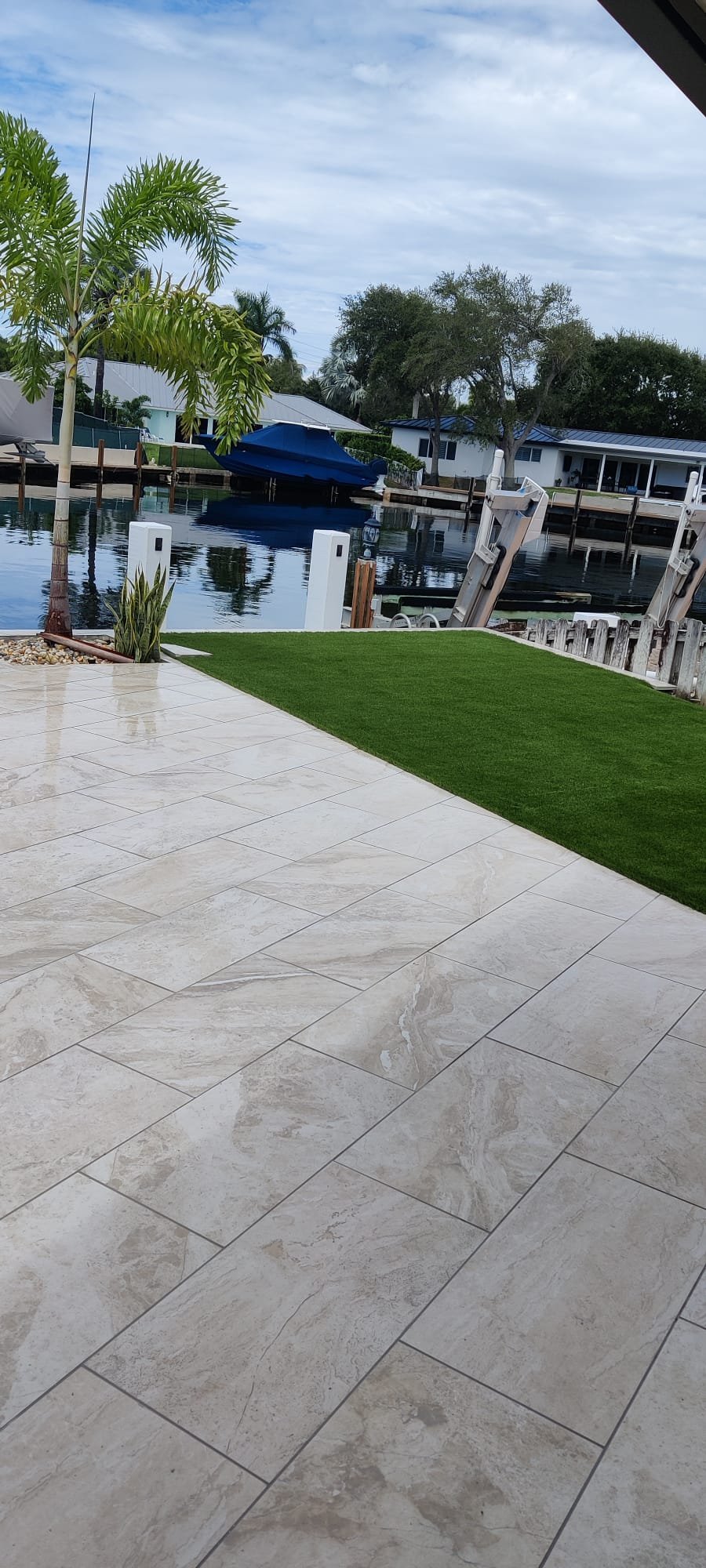
Color enhancement in action: the sealer wet-look brings the original pigment back out of sun-faded pavers.
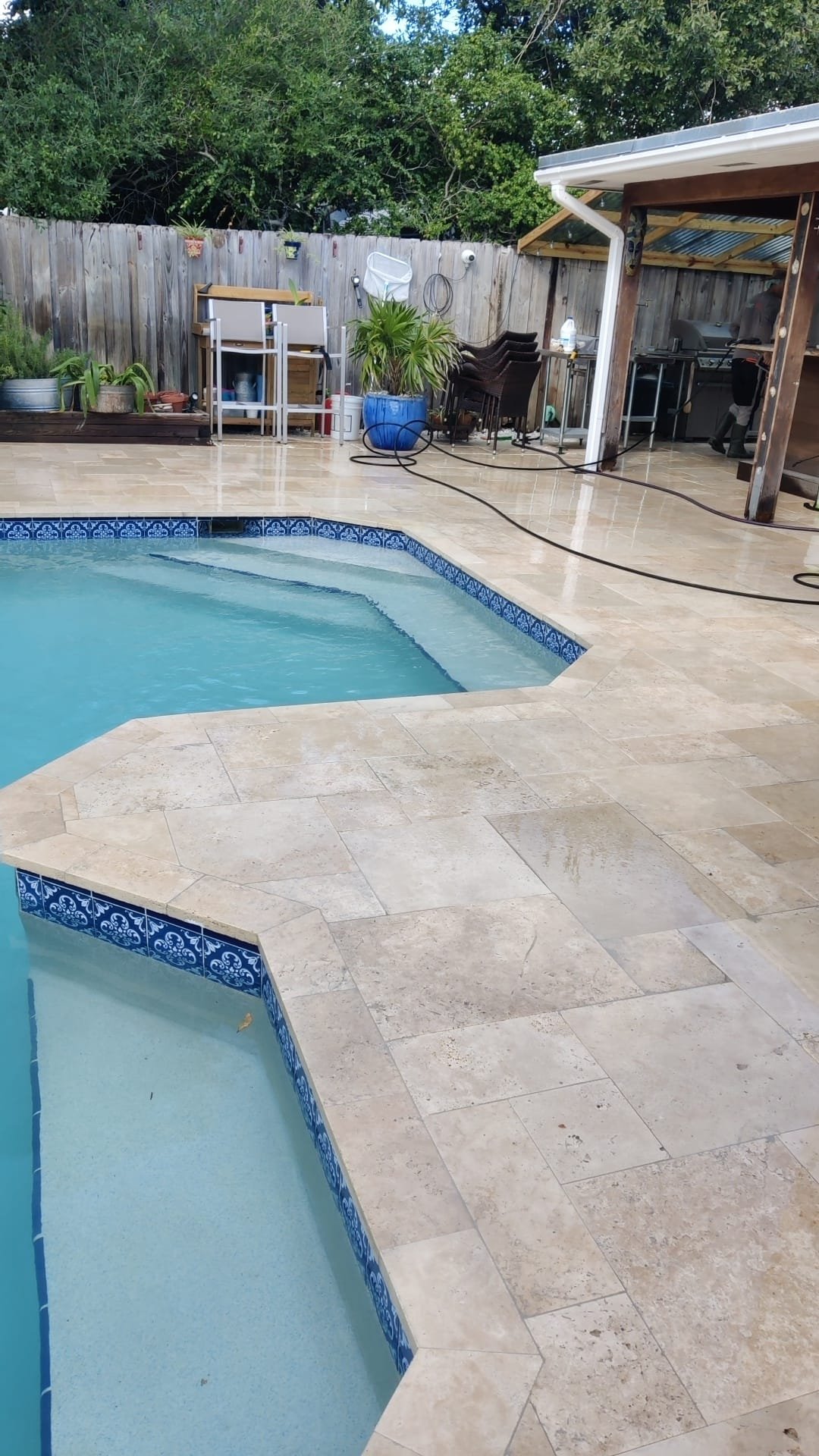
A dramatic example of what UV does to unsealed pavers in Florida — and what comes back with restoration.
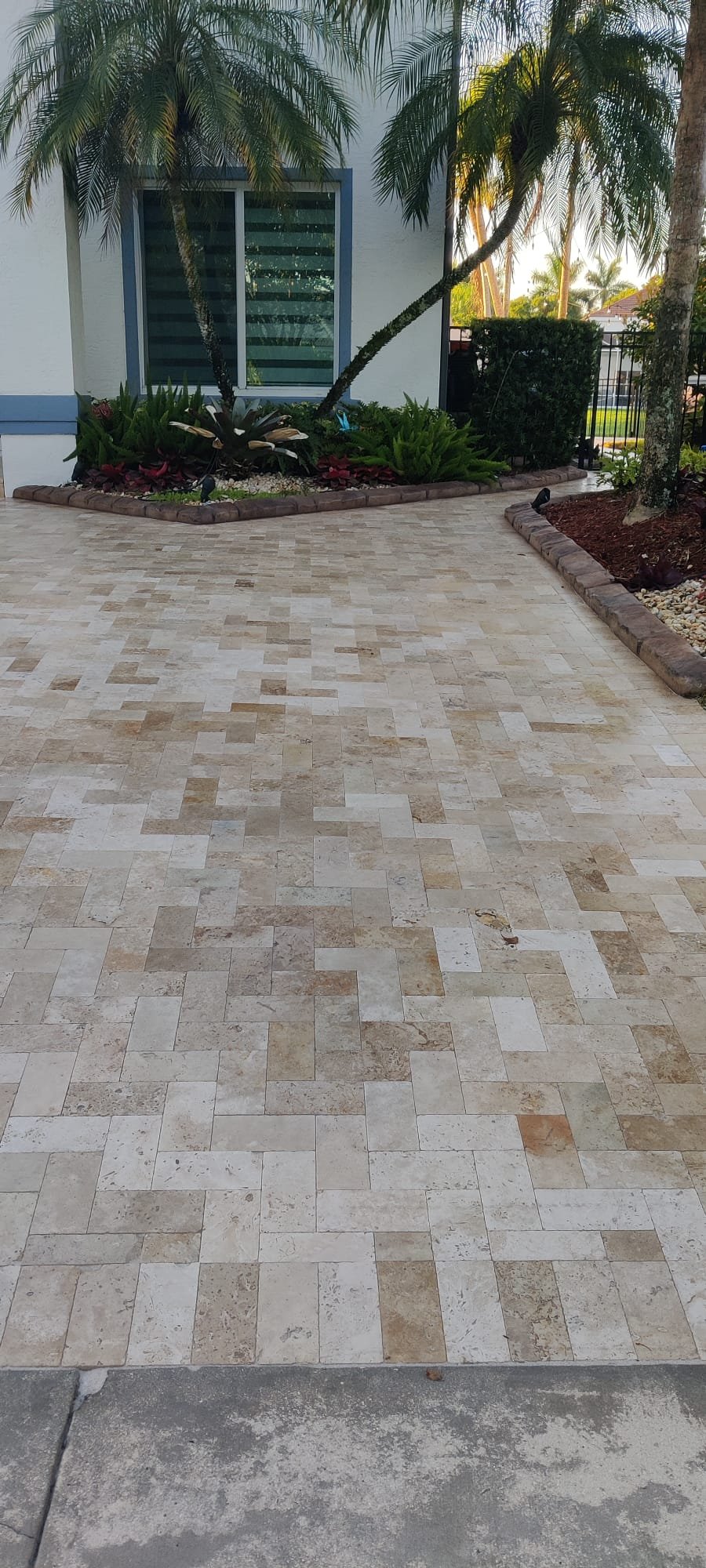
Professional restoration sequence: strip, clean, re-sand, seal. The finish is the last 10% of the work.
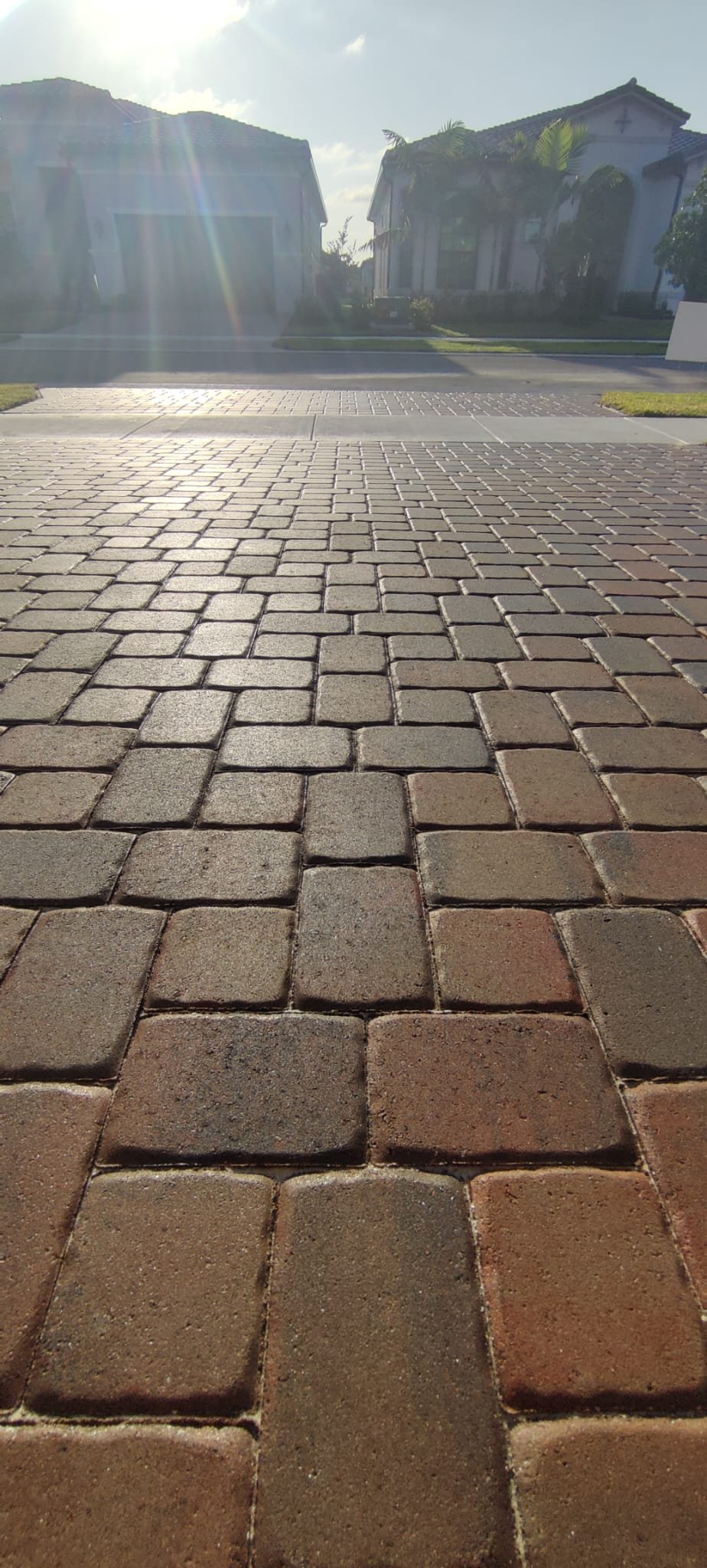
Pool deck sealing, before and after — the sealed side sheds water instead of absorbing it.
Travertine sealing with a penetrating sealer that keeps the stone breathable — critical on Florida pool decks.
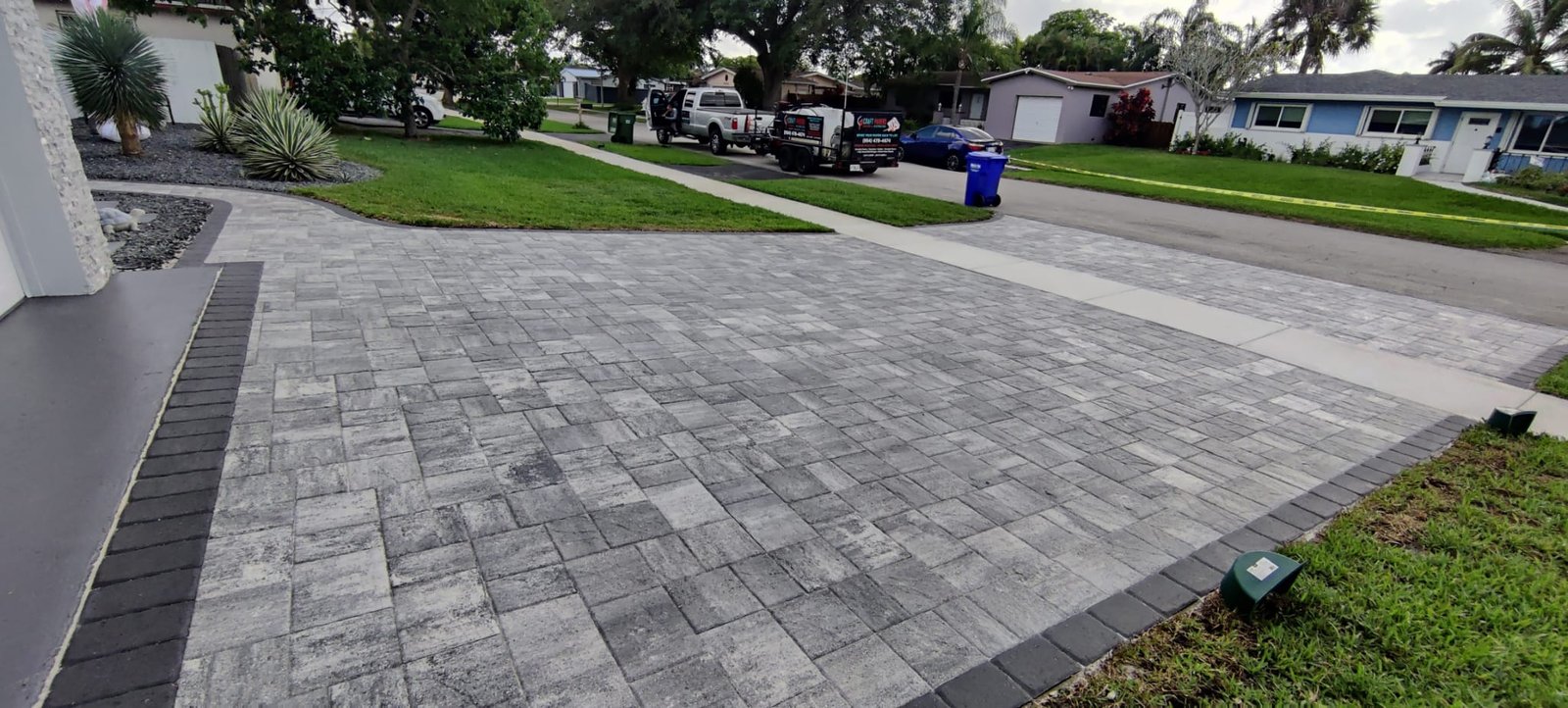
Concrete pavers before and after sealing: joints stabilized and the surface protected from staining.
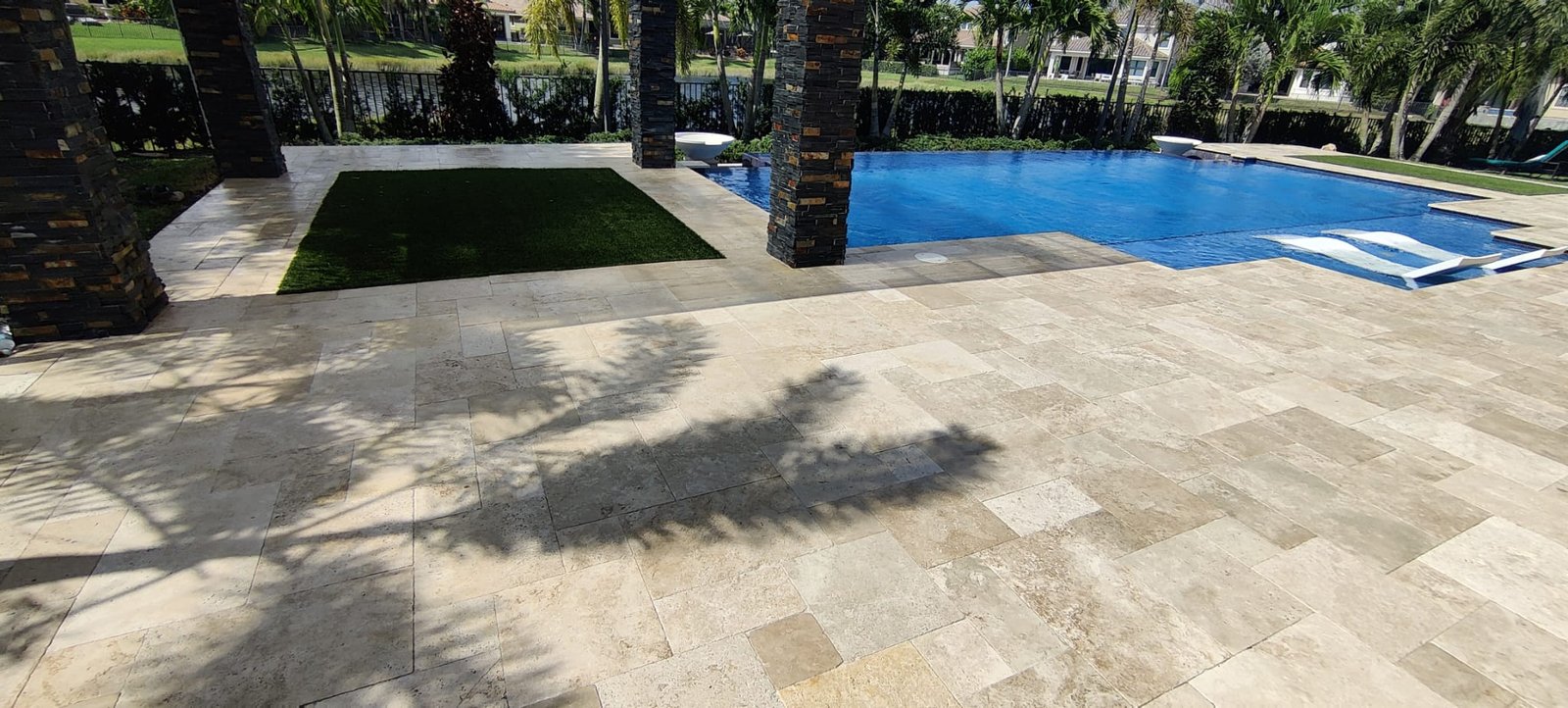
Joint sand restoration — open, washed-out joints refilled with polymeric sand and locked in with sealer.
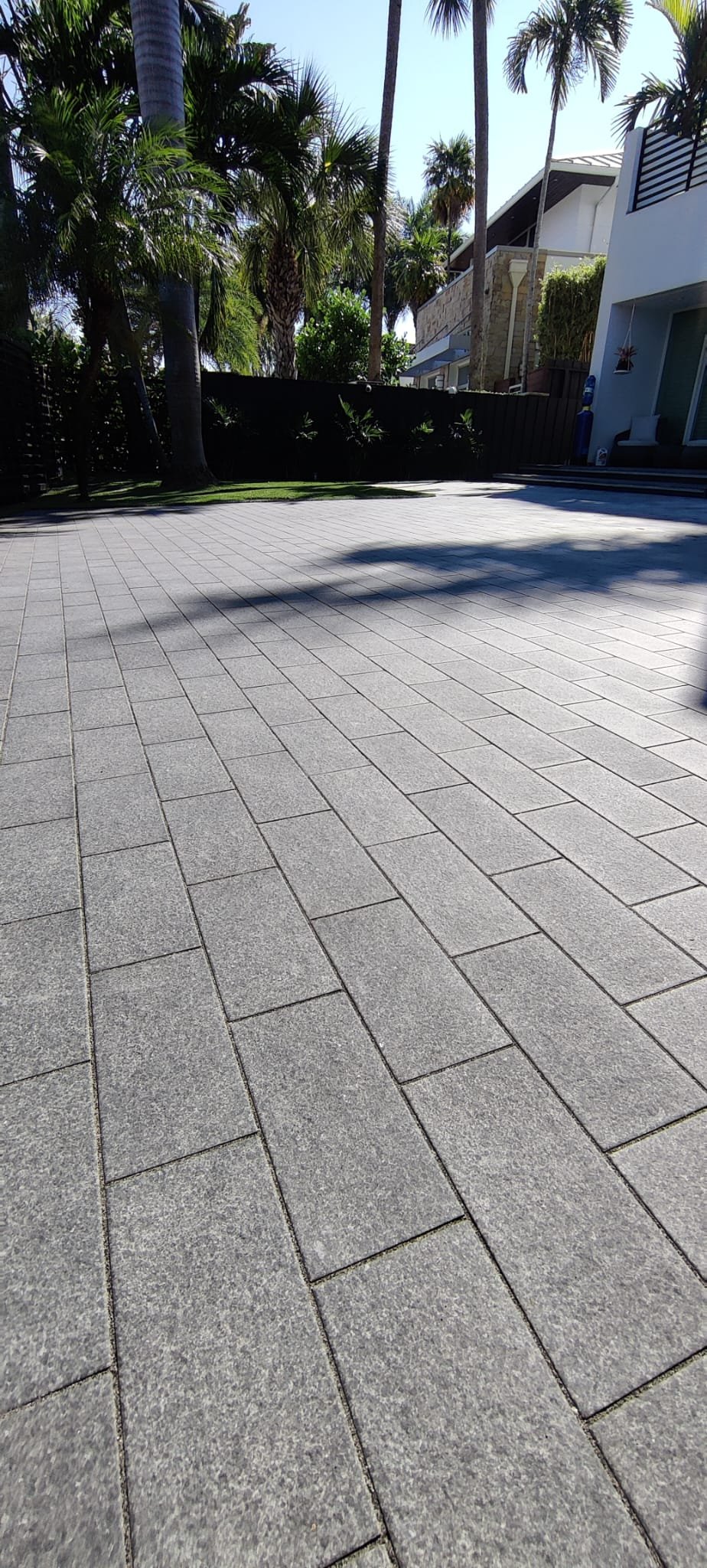
Driveway cleaning result in South Florida: mold and tire marks removed without stripping the joint sand.
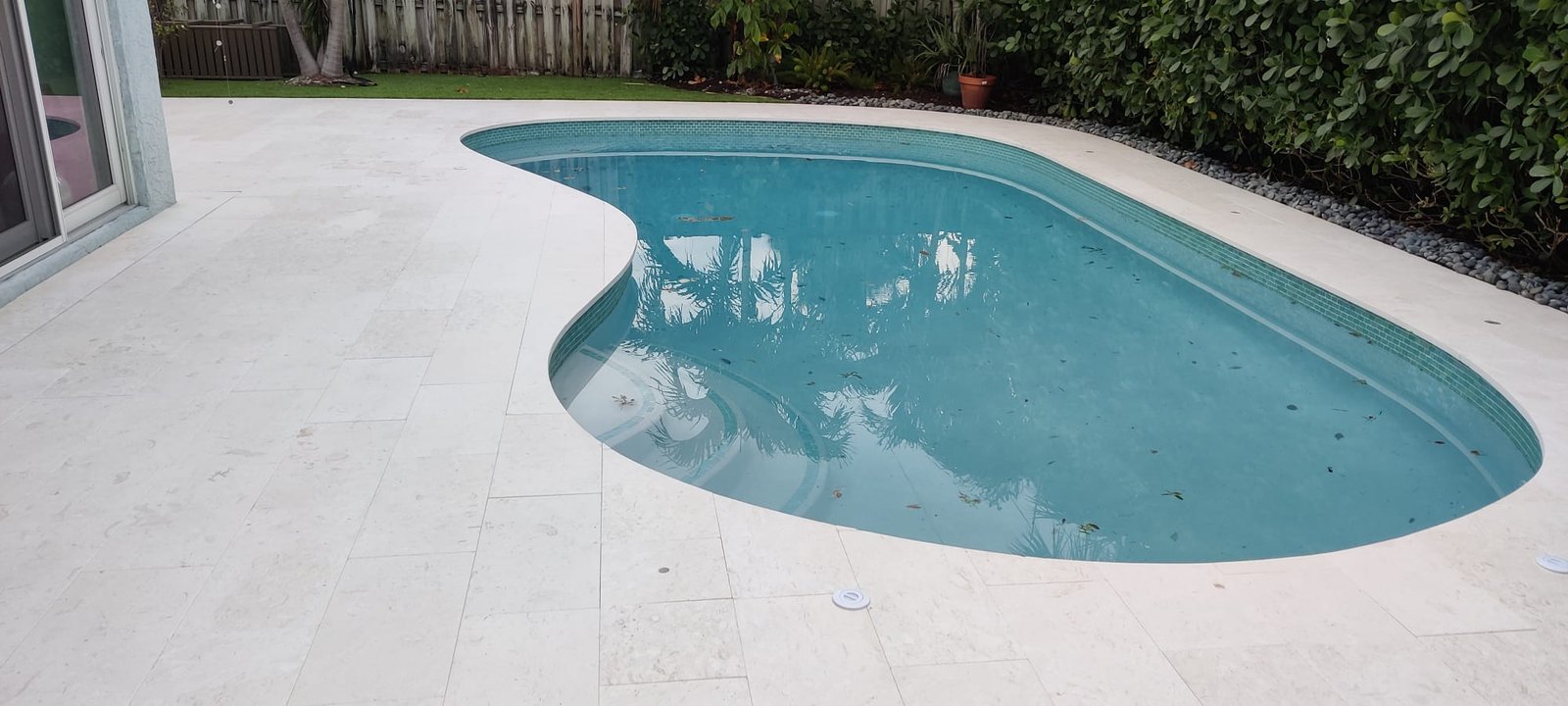
Gloss-finish sealing — the wet look that most Boca Raton driveway clients choose.
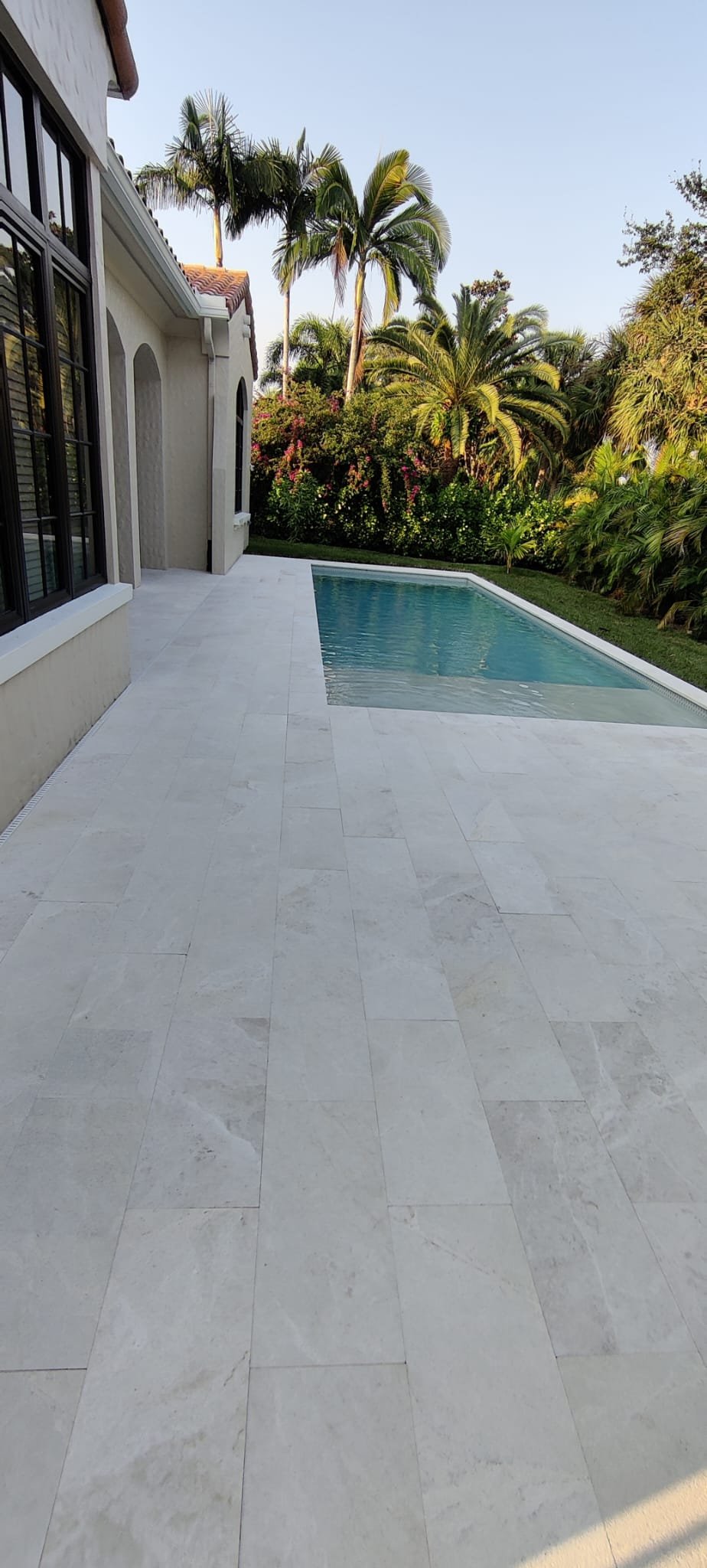
Outdoor paver restoration in Boca Raton, photographed in the same light for an honest comparison.
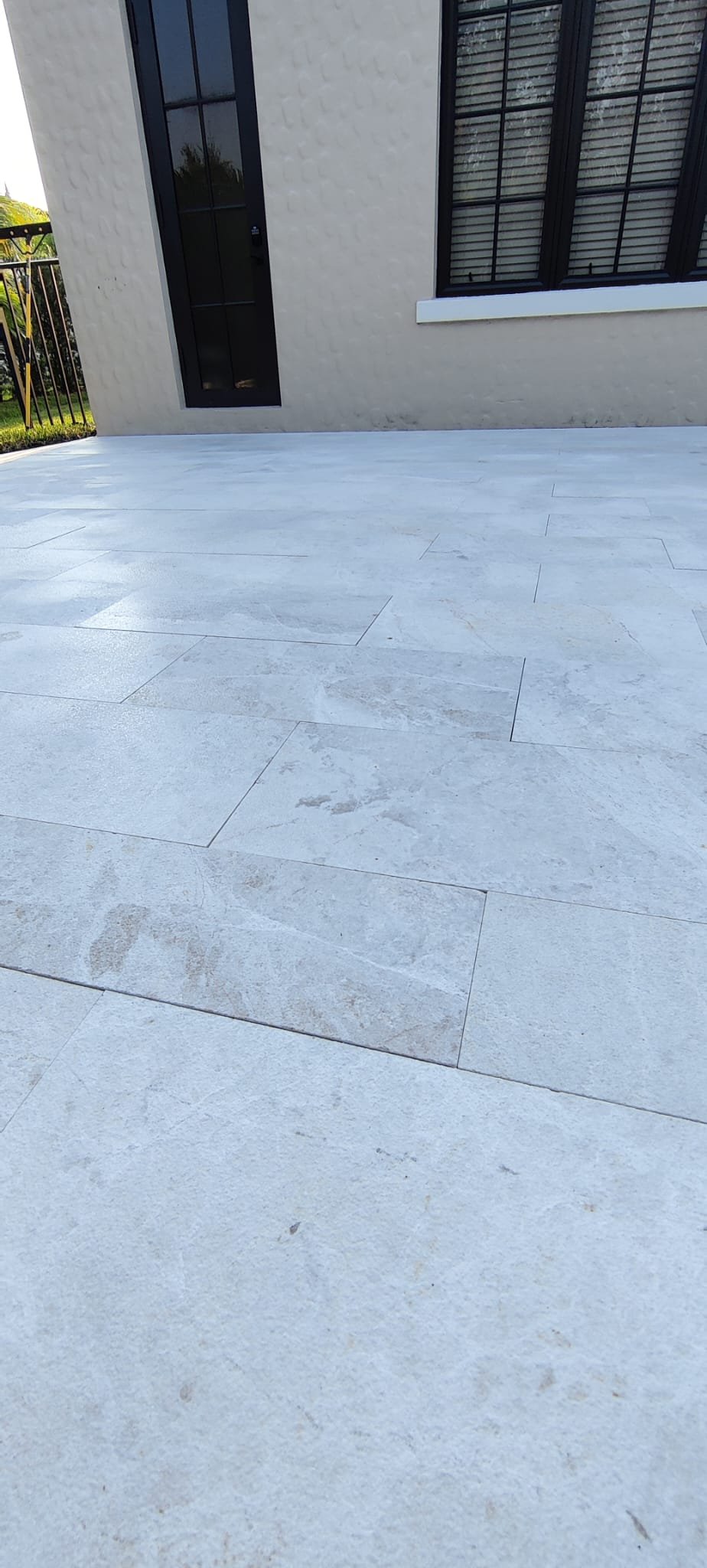
Color enhancement from a single seal coat — no paint, no stain, just the paver's own pigment protected.
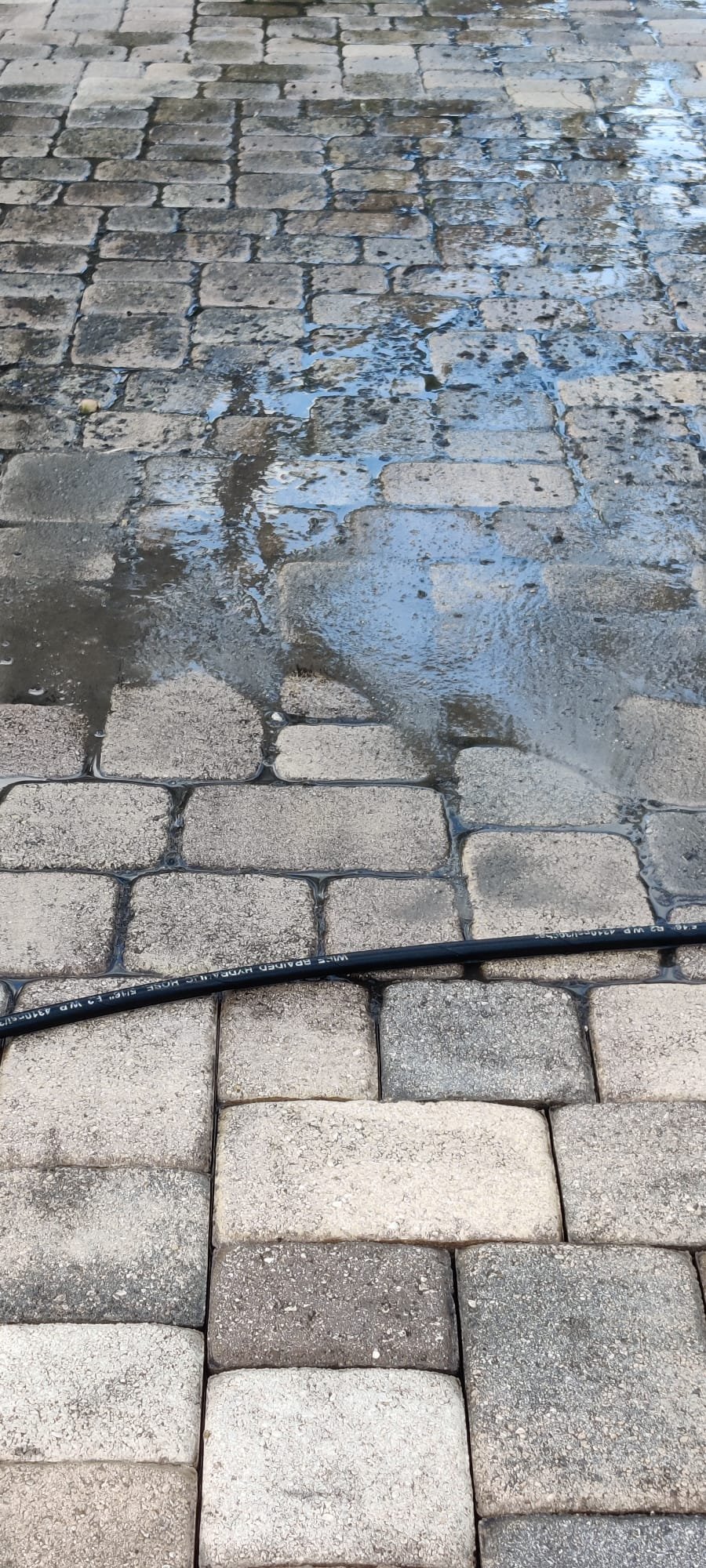
A full professional sealing job in South Florida: cleaned, re-sanded, sealed, and cured before use.
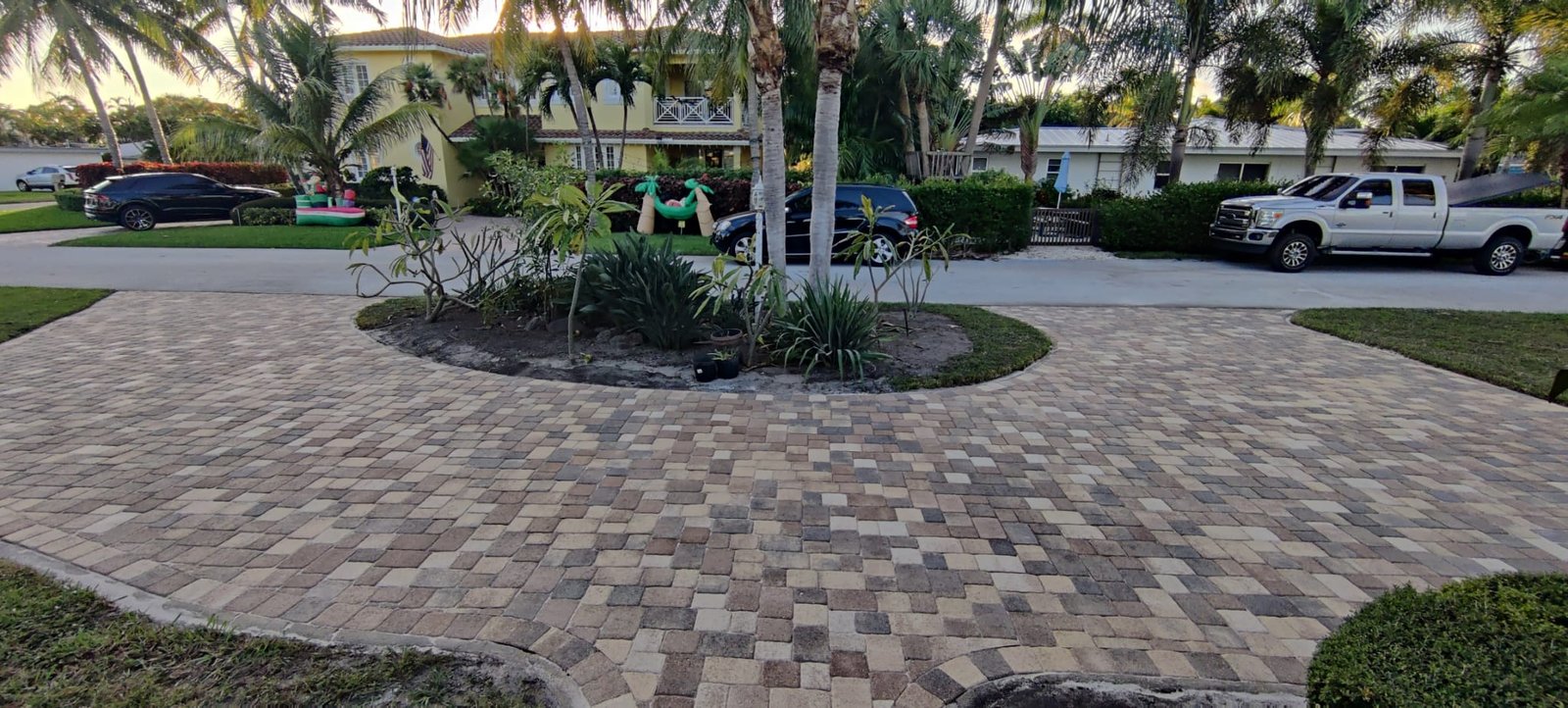
Cleaning and sealing, before and after — the two halves of the same surface tell the whole story.
Paver Sealing — Questions Answered
Is there a downside to sealing pavers?
When should you seal your pavers, especially new ones?
Is it better to spray or roll paver sealer?
How long will paver sealer last and how often should pavers be resealed?
What is the process for sealing pavers?
What are the benefits of sealing pavers?
What preparation is needed before sealing pavers?
What are the ideal weather conditions for sealing pavers?
Will sealing make my pavers slippery?
How soon can you walk or drive on pavers after sealing?
Related Guides
Ready for results like these?
Get a free estimate and see what Craft Pavers can do for your driveway, pool deck, or patio.