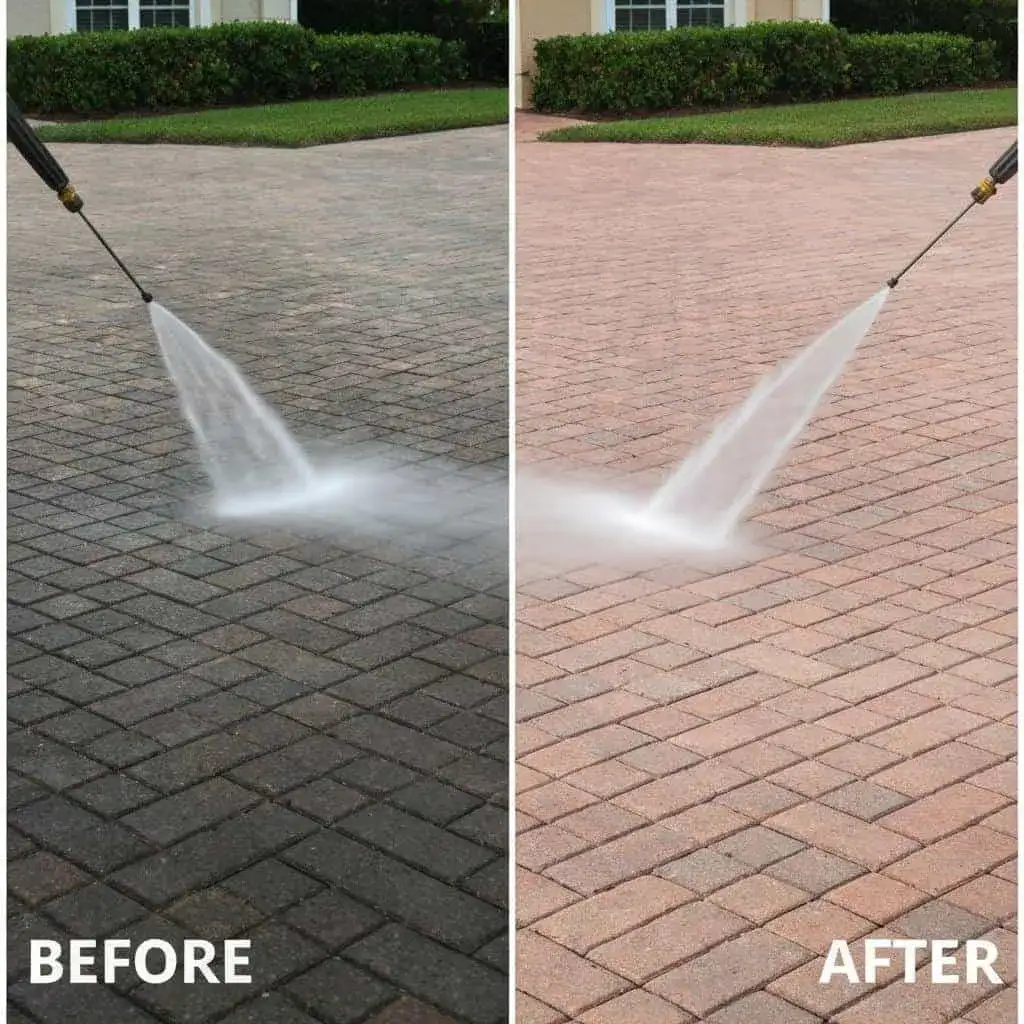
Cleaning pavers with a pressure washer works well if done right. Use the correct methods to keep the joint sand in place. This sand helps pavers stay steady and stops weeds or movement. Prepare properly and use good tools to clean without damage, keeping your patio or driveway strong and looking nice.
The Importance of Joint Sand
Joint sand helps keep pavers steady and in place. It stops them from moving when stepped on or driven over. The sand spreads weight evenly to avoid damage. Without good sand, pavers can shift and weaken your patio or driveway. Polymeric sand is great for stopping weeds and keeping pavers still—it has special binders that harden with water to hold pavers tight.
Tools and Materials
Pressure Washer Settings
Pick a pressure washer with adjustable pressure. Start with low pressure, around 1300 to 1800 psi, to keep sand in place. Use a rotary surface cleaner to spread water evenly and protect the sand. Set the nozzle to a fan spray instead of a strong jet. This cleans well without washing away the sand.
Polymeric Sand
After washing, use a broom and dustpan to clear loose dirt. Once clean, fill the gaps with fresh polymeric sand. It hardens with water, making pavers stable and stopping weeds. Sweep the sand into the spaces carefully to fill all gaps.
Paver Sealer
Sealing pavers after cleaning is important for long-term care. Sealers guard against bad weather and stop cracks from forming. They keep paver colors bright and fresh-looking and block stains from oil, grease, and other messes. Apply a high-quality sealer evenly across the surface after cleaning.
Step-by-Step Guide
Preparing the Area
Before cleaning pavers, clear the area completely. Move furniture, planters, and other items away. Sweep the surface with a broom to remove dirt, leaves, and debris. Focus on the joints, as trapped debris can block cleaning. Cover nearby plants with tarps or plastic sheets to protect them from water and cleaning solutions.
Setting Up the Pressure Washer
Free Estimate · No Obligation
Ready to transform your pavers?
Same-week scheduling available across South Florida.
Set the pressure washer between 1300 and 1800 psi. Attach a rotary surface cleaner to spread water evenly. Keep the nozzle at least 6 inches away from the joints to avoid too much pressure on the sand. Wait 14 days after installing new pavers before pressure washing to let the joint sand harden.
Cleaning at the Right Angle
Hold the nozzle at a slight angle to direct water across the surface, not straight into the joints. Start in one corner and clean in straight lines to cover the area evenly. Keep the nozzle moving to avoid too much pressure in one spot. Rinse until the water runs clear, leaving no residue behind.
Refilling Joint Sand
After pressure washing, adding new joint sand is very important. Make sure the pavers are fully dry first. Sweep polymeric sand into the gaps using a broom. Work carefully to fill all spaces completely. Gently press the sand down so it fits tightly in the joints. Lightly spray water to set the polymeric sand. Do this on a sunny day so the sand cures properly.
Sealing the Pavers
Seal your pavers right after cleaning and adding sand. Select the right sealer for your paver type and weather. Apply evenly with a roller or sprayer. Allow to dry fully before using the area again. Reseal every two to three years to keep your pavers protected and looking great.
Common Mistakes to Avoid
- Using too much pressure—keep between 1300-1800 psi
- Holding the nozzle too close—keep at least 6 inches away from joints
- Forgetting to add new sand after cleaning
- Skipping the sealing step after cleaning
- Using harsh chemicals like bleach that can damage sealants
Maintenance Tips
Sweep your patio often to keep it clean. Clean spills right away to avoid stains. Add new joint sand when needed. Seal pavers every two to three years. Avoid strong chemicals—choose mild soap or cleaners made for pavers instead. Check for damage and movement regularly and fix issues promptly to keep your pavers safe and looking good for years.