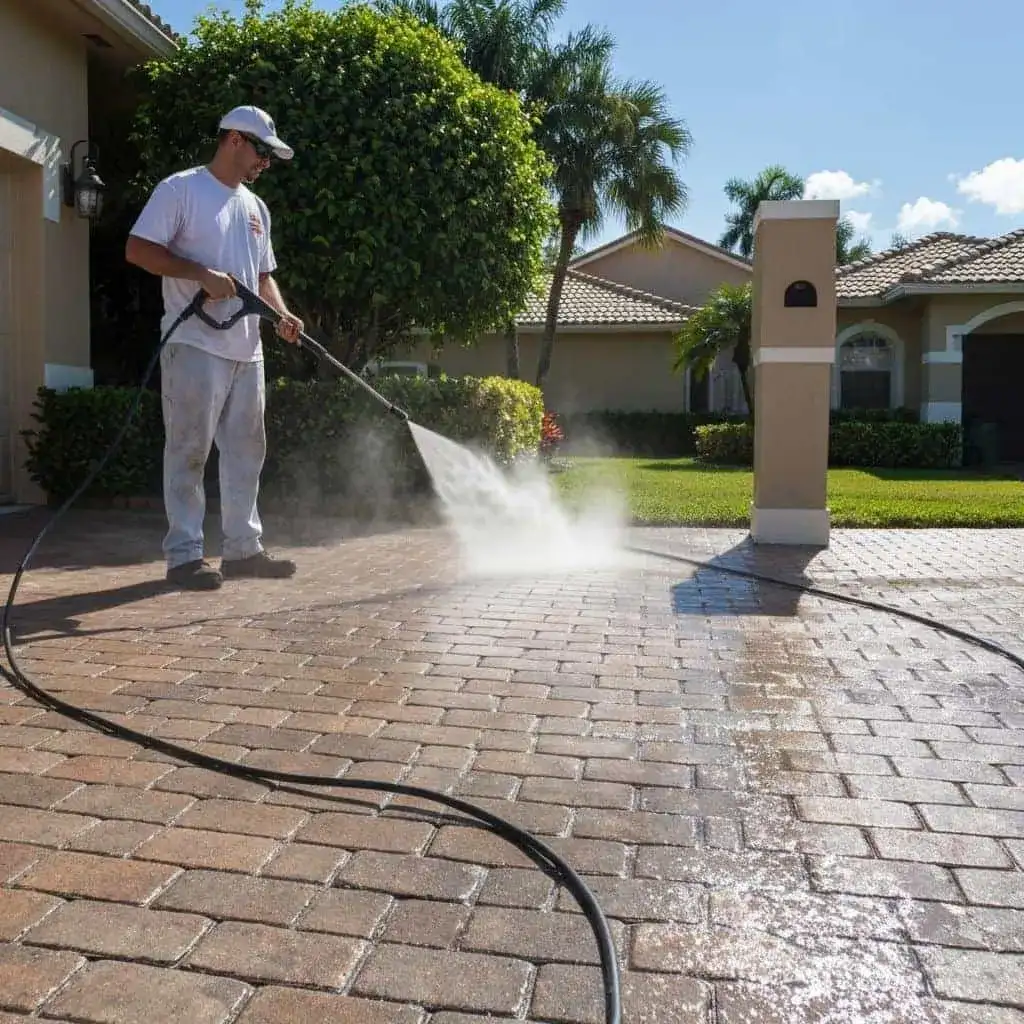
Professional pressure washing driveway in South Florida
Licensed & Insured HOA-Approved Methods Eco-Friendly Detergents

Professional Pressure Washing South Florida

High-performance pressure washing and soft-wash services for driveways, pool decks, fences, and exterior surfaces. HOA-compliant methods with eco-friendly detergents safe for Florida landscaping.

Call Us Now 954-478-4674
5.0
45 Google Reviews

Rotary Surface Cleaning

Industrial rotary heads deliver uniform 3,000–4,000 PSI pressure — no streaking, no etching, zero missed coverage

Soft-Wash Bio Treatment

Professional-grade surfactants kill biological growth at the root — preventing re-growth for 12–18 months

Rust & Iron Extraction

Specialist oxalic acid treatment for well-water orange staining — neutralized and rinsed to prevent re-staining

HOA Documentation

Service receipt provided for HOA compliance submissions — clean results guaranteed or we return at no charge

Quote Free, on-site
Response Within 24 hours
License CILB #U-22487
Free Estimate
Surfaces We Clean

Complete Exterior Cleaning Services

Most Requested

Driveways & Sidewalks

High-pressure rotary surface cleaning removes oil stains, tire marks, black algae (Gloeocapsa Magma), and rust deposits — restoring concrete and paver driveways to near-new appearance.

  • Oil & grease extraction
  • Rust stain treatment
  • Black algae elimination
  • Edge-to-edge coverage
Slip-Prevention Focus

Pool Deck & Lanai

Pool decks accumulate slippery bio-film invisible to the naked eye. Our soft-wash process eliminates the bio-film at the cellular level and applies a sanitizing rinse — making pool surrounds safe for bare feet.

  • Invisible bio-film removal
  • Sanitizing final rinse
  • Non-slip surface restoration
  • Travertine & paver safe
Soft Wash Only

Fences & Walls

High pressure destroys vinyl, painted wood, and stucco. Our low-pressure soft-wash uses specialized surfactants to safely strip mold, mildew, and chalky oxidation from every surface type without surface damage.

  • Vinyl, wood & stucco safe
  • Mold & mildew elimination
  • Oxidation removal
  • Color restoration
Service Areas

Pressure Washing Service Areas

Palm Beach County

  • Boca Raton
  • Delray Beach
  • Boynton Beach
  • West Palm Beach
  • Lake Worth
  • Wellington
  • Jupiter
  • Palm Beach Gardens
  • Royal Palm Beach
  • Greenacres

Broward County

  • Fort Lauderdale
  • Pompano Beach
  • Coral Springs
  • Deerfield Beach
  • Hollywood
  • Pembroke Pines
  • Miramar
  • Sunrise
  • Plantation
  • Davie

Pressure Washing Questions Answered

Is it a good idea to pressure wash pavers?
Yes — pressure washing pavers is safe and effective when done at the right PSI with the right technique. Wrong: renting a 3,500 PSI residential unit and blasting the surface with a zero-degree nozzle. Right: 800–1,200 PSI soft-wash pressure with a wide fan tip (15–25°), pre-treatment with paver cleaner, and sweeping parallel to joints. Done correctly, using a pressure washer removes years of algae, dirt, oil stains, and biological growth without damaging the surface or blowing out joint sand. Done wrong, it undercuts the base and voids paver warranties.
What PSI should you use when pressure washing pavers?
The right PSI for pressure washing pavers is 800–1,200 PSI (soft-wash range), never above 2,000 PSI at close range. Match to paver type: concrete pavers tolerate up to 1,500 PSI with a fan nozzle; brick pavers stay under 1,200 PSI; travertine and natural stone under 1,000 PSI. Always use a wide fan nozzle (15° or 25°), never a zero-degree jet, and keep the wand tip 12+ inches from the paver surface. A surface cleaner attachment is safer than a wand for large driveway or patio areas — distributes pressure evenly.
What is the best way to clean outdoor pavers?
The best way to clean outdoor pavers combines pre-treatment plus soft-wash pressure washing: (1) Pre-wet surrounding landscaping to protect from runoff. (2) Apply biodegradable paver cleaner uniformly, let dwell 5–10 minutes. (3) Rinse with pressure washer at 800–1,200 PSI using a wide fan nozzle or surface cleaner attachment. (4) Sweep parallel to joints, never perpendicular into them. (5) Top up joint sand if any washed out. (6) Wait 24–48 hours full dry before applying any sealer. This is the professional pressure washing pavers protocol used by every reputable Florida paver cleaning service.
Will Dawn dish soap clean pavers?
Dawn or any dish soap will lift light grease and surface dirt from concrete pavers, but it's not the right choice for a real cleaning job. Three reasons: (1) Dish soap leaves a film residue that attracts more dirt within days. (2) It has no algaecidal or antimicrobial action — algae, mold, and mildew are the actual buildup on Florida pavers, and dish soap doesn't kill them. (3) Sudsy runoff is harder to rinse cleanly and can leave streaks. For real paver cleaning, use a purpose-made paver cleaner (biodegradable, algaecide-active) applied with a pump sprayer or garden hose foamer — not dish soap.
How often should you pressure wash pavers?
Florida homeowners should pressure wash pavers every 12–18 months for driveways and patios, more frequently (every 6–9 months) for shaded areas that stay damp and grow algae faster. Signs it's time: visible black, green, or orange discoloration; slippery patches from algae; joint sand looking dirty or discolored; HOA notices about surface cleanliness. Between full washes, a quarterly garden hose rinse removes loose debris and prevents buildup from setting. Excessive pressure washing (more than 2×/year) starts eroding polymeric sand and shortens paver lifespan.
What are the risks of improper pressure washing for pavers?
Improper pressure washing damages pavers in four ways: (1) Blowing out polymeric sand from joints — the #1 damage, exposes the bedding sand underneath to erosion. (2) Etching the concrete surface — visible from repeated high-PSI passes with a zero-degree jet, creates rough patches that hold dirt. (3) Undercutting the bedding sand — happens when jet water penetrates joints; leads to sinking pavers within months. (4) Damaging the aggregate face of natural stone (travertine, marble) — permanent surface texture loss. All four are prevented by soft-wash pressure (under 1,500 PSI) and a wide fan nozzle.
Should you seal pavers after cleaning or pressure washing?
Yes — pressure washing removes protective oils and old sealer along with dirt, exposing bare paver surface. Applying breathable sealer 24–48 hours after cleaning (once fully dry) locks in the clean look, blocks stain absorption, stabilizes new joint sand, and extends the interval before the next wash cycle. Best sequence: pressure wash → let dry 24–48h → top up polymeric sand → apply breathable UV-stable paver sealer. See our sealing service and cost guide for the full re-seal protocol.
What attachments or cleaning agents should be used when pressure washing pavers?
Recommended attachments: (1) Surface cleaner attachment (spinning bar with two nozzles under a shroud) — distributes pressure evenly across driveway and patio areas, prevents streaking, protects joint sand. (2) 15° or 25° fan nozzle for detail work near edges. (3) Never zero-degree jet nozzle. Cleaning agents: biodegradable paver cleaner (sodium percarbonate base for organics, oxalic acid for rust), applied via pump sprayer or downstream injector. Avoid: bleach (degrades polymeric sand), muriatic acid (etches concrete), dish soap (film residue). For pool decks near vegetation, always use aquatic-safe surfactants.
Will pressure washing remove sand between pavers?
Yes if done wrong, no if done right. High-PSI water (2,000+ PSI) with a narrow nozzle held close to the surface will blast joint sand out within seconds. Soft-wash pressure (800–1,200 PSI) with a wide fan nozzle held 12+ inches away and swept parallel to joints (not perpendicular into them) removes minimal sand. Best practice: expect to top up polymeric sand after any pressure wash job, even a careful one. Never pressure wash a paver surface without a fresh polymeric sand top-up plan afterward — open joints invite weed germination within weeks.
Can you pressure wash all types of pavers?
Almost all — with method adjusted to paver type. Concrete pavers: standard soft-wash up to 1,500 PSI, fan nozzle. Brick pavers: 800–1,200 PSI (older brick can chip at higher pressure). Travertine and natural stone: 800–1,000 PSI max, never near the edges (chipping risk). Porcelain pavers: 1,000–1,500 PSI, safe against chemical splash. The one exception: unsealed clay brick over 30 years old — often too fragile for pressure washing, requires soft-wash chemistry with a garden hose rinse. When in doubt, hire a professional pressure washing pavers service familiar with your paver type.

Ready for a Spotless Exterior?

Get a free, no-obligation pressure washing quote. Same-week scheduling available for most Palm Beach and Broward County locations.

Guides & Pricing Resources